

Introduction
The AI coding assistant market has grown from a single dominant product right into a genuinely various ecosystem. Some instruments concentrate on lightning-fast inline autocomplete, others are constructed round full agentic workflows that may plan and execute multi-file adjustments, and others focus on explicit niches like terminal automation or design-to-code conversion. This roundup covers ten of probably the most notable AI coding assistants price evaluating in 2026, organized roughly from broad general-purpose instruments to extra specialised choices.
1. GitHub Copilot
The instrument that popularized the class stays one of many strongest total decisions, particularly for groups already embedded within the GitHub ecosystem. It combines stable inline autocomplete with Copilot Chat and more and more succesful agent options that may open pull requests straight from assigned points. Its largest benefit is native integration with the platform the place most groups already handle code, points, and CI/CD.
2. Cursor
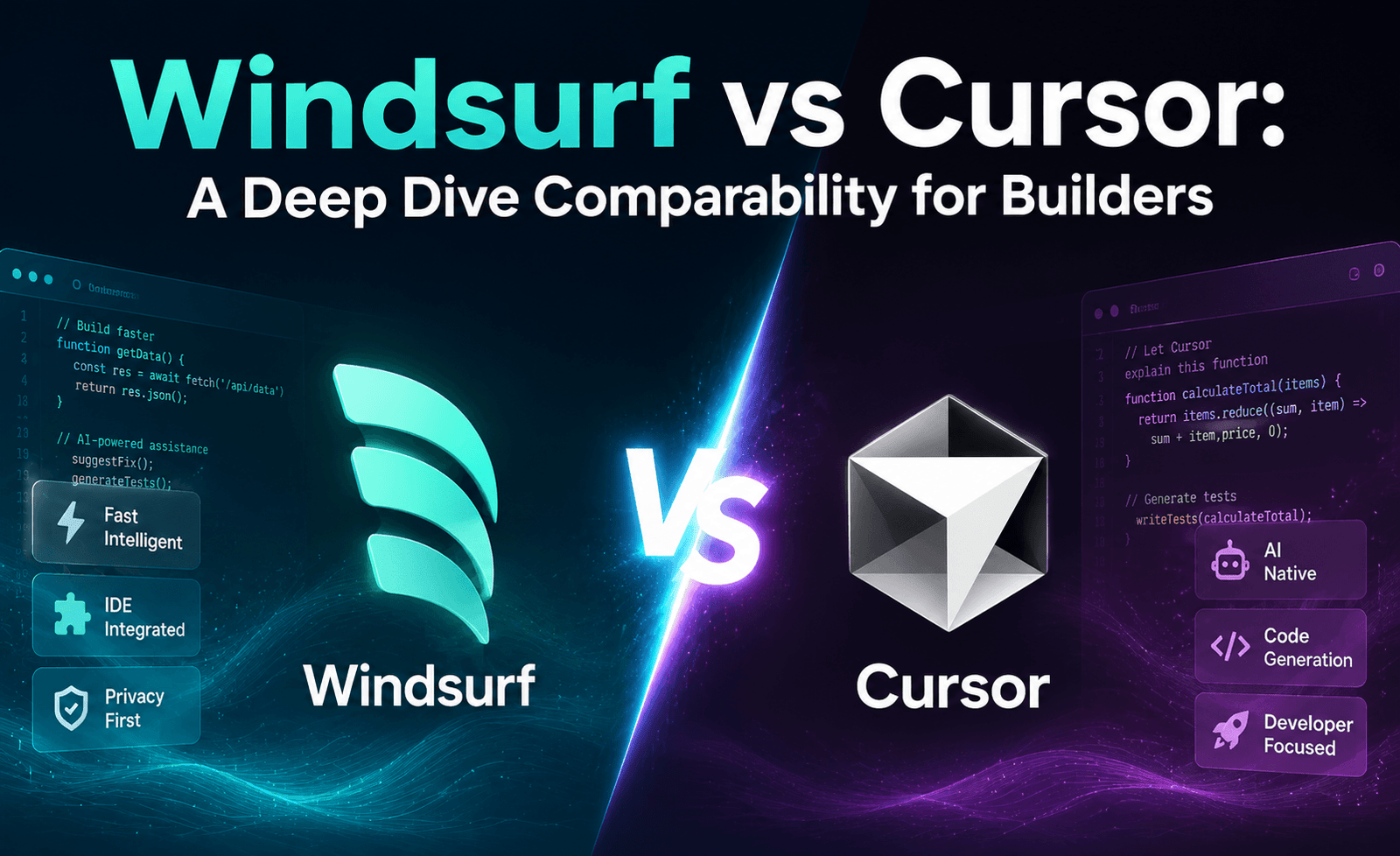
Cursor rebuilt the code editor itself round AI relatively than bolting AI onto an current one. Its whole-repository context consciousness and Composer mode for multi-file agentic edits make it a favourite amongst builders working in massive, complicated codebases who’re keen to undertake a brand new main editor in trade for deeper contextual intelligence.
3. Claude Code
Anthropic’s agentic coding instrument operates from the command line and IDEs, exploring codebases, making use of adjustments, and working assessments to confirm its personal work earlier than reporting again. It shines on well-scoped upkeep duties, bug fixes, and take a look at writing, and its cautious conduct round ambiguous directions makes it a dependable selection for delegating actual chunks of labor relatively than simply producing ideas.
4. Windsurf
Windsurf positions itself as a collaborative, agentic IDE with a robust concentrate on sustaining circulation state throughout lengthy coding periods. Its “Cascade” agent function is designed to deal with bigger, multi-step duties with a heavy emphasis on transparency, displaying builders precisely what it modified and why at every step, which appeals to groups that need agentic energy with out sacrificing auditability.
5. Amazon Q Developer
Amazon’s coding assistant integrates tightly with AWS providers, making it a robust decide for groups constructing closely on AWS infrastructure. Past code completion, it provides options for safety scanning, dependency upgrades, and infrastructure-aware ideas that perceive the encircling cloud setting relatively than simply the code itself.
6. Tabnine
Tabnine has carved out a distinct segment as a privacy-focused assistant, providing on-premises and air-gapped deployment choices that enchantment strongly to regulated industries like finance and healthcare. It helps coaching on a personal codebase so its ideas match inner conventions with none code ever leaving the group’s personal infrastructure.
7. Codeium (Windsurf’s predecessor lineage) / Supercomplete instruments
A number of instruments on this lineage concentrate on extraordinarily quick, low-latency autocomplete with beneficiant free tiers, making them in style amongst particular person builders and college students who need sturdy ideas with out a vital subscription dedication. These instruments typically commerce a number of the deeper agentic functionality of bigger platforms for velocity and accessibility.
8. Replit Agent
Replit’s agent is constructed round its browser-based improvement setting and is especially sturdy for quickly scaffolding total small functions from a pure language description, then iterating on them conversationally. It’s a favourite amongst hobbyists, educators, and anybody prototyping an concept who needs to go from description to a working utility with minimal native setup.
9. Sourcegraph Cody
Cody leans into large-scale code search and understanding, making it significantly efficient for giant organizations with sprawling, multi-repository codebases the place discovering the best context is half the battle. Its energy lies much less in flashy autonomous brokers and extra in giving builders exact, well-grounded solutions about how an enormous codebase really works.
10. JetBrains AI Assistant
For builders deeply invested within the JetBrains ecosystem (IntelliJ IDEA, PyCharm, WebStorm, and others), the native AI Assistant provides tightly built-in ideas, refactoring assist, and chat that understands JetBrains-specific mission constructions and inspections without having a third-party plugin layered on high.
Comparability at a Look
| Software | Finest For | Standout Function |
|---|---|---|
| GitHub Copilot | GitHub-centric groups | Subject-to-PR agent workflow |
| Cursor | Giant, complicated codebases | AI-native editor, deep context |
| Claude Code | Delegated upkeep duties | Self-verifying agent loop |
| Windsurf | Lengthy agentic periods | Clear multi-step Cascade agent |
| Amazon Q Developer | AWS-heavy groups | Cloud-aware ideas |
| Tabnine | Regulated industries | On-premises/personal deployment |
| Replit Agent | Speedy prototyping | Concept-to-running-app scaffolding |
| Sourcegraph Cody | Large multi-repo orgs | Giant-scale code search |
| JetBrains AI Assistant | JetBrains IDE customers | Native IDE integration |
Learn how to Select the Proper One
Begin along with your current workflow relatively than a function guidelines. In case your staff lives inside GitHub, Copilot’s native integration is tough to beat. For those who spend most of your day inside a JetBrains IDE, the native AI Assistant avoids friction {that a} third-party plugin may introduce. In case your codebase is massive and also you incessantly really feel just like the assistant “would not perceive the entire image,” an AI-native editor like Cursor or a search-first instrument like Cody is price trialing. If you wish to delegate total duties relatively than settle for ideas line by line, agentic choices like Claude Code or Windsurf’s Cascade deserve a severe look.
Value and information governance additionally matter greater than many groups initially assume. Regulated industries ought to weight personal deployment choices like Tabnine closely, whereas fast-moving startups could prioritize velocity of iteration and beneficiant free tiers over enterprise governance options they don’t but want.
Evaluating Instruments by Workforce Measurement
Solo builders and hobbyists typically profit most from instruments with beneficiant free tiers and low switching prices, since they’re much less more likely to want enterprise governance options and extra more likely to worth fast experimentation. Replit Agent and the sooner autocomplete-first instruments have a tendency to suit this profile effectively, letting a person go from concept to working prototype with out a lot setup overhead or price range dedication.
Small to mid-sized groups are inclined to prioritize a stability of functionality and value predictability. That is the place instruments like Cursor, Windsurf, and Claude Code discover a lot of their viewers, since these groups are massive sufficient to learn meaningfully from agentic multi-file enhancing however not but burdened with the procurement complexity of a big enterprise. Bigger organizations, in contrast, typically weight governance, compliance certifications, and native integration with current platforms like GitHub or AWS extra closely than uncooked functionality variations, which tends to favor GitHub Copilot, Amazon Q Developer, or Tabnine relying on the encircling infrastructure.
Evaluating Instruments by Codebase Traits
The form of your codebase issues as a lot as the dimensions of your staff. Giant monorepos with many interdependent providers profit disproportionately from instruments with sturdy whole-repository context, akin to Cursor or Sourcegraph Cody, since the price of an assistant misunderstanding cross-file relationships grows with codebase complexity. Smaller, well-organized codebases are extra forgiving, and the variations between instruments on this class grow to be far much less noticeable, making price, editor desire, and staff familiarity extra vital deciding components than uncooked contextual functionality.
Codebases with strict compliance necessities, akin to these in healthcare, finance, or authorities contracting, ought to weight personal and on-premises deployment choices closely, because the capacity to ensure that supply code by no means leaves a managed setting is commonly a tough requirement relatively than a nice-to-have function.
The Position of Agentic Autonomy in Software Choice
Maybe the one largest philosophical divide throughout this checklist of ten instruments is how a lot autonomy a staff really needs to grant an AI assistant. Some groups need an assistant that behaves as a barely smarter autocomplete, providing ideas however by no means appearing independently. Others actively need to delegate total multi-step duties, accepting a review-afterward workflow in trade for bigger productiveness positive factors. Instruments like Claude Code and Windsurf’s Cascade lean explicitly into the latter mannequin, whereas extra conventional autocomplete-first instruments stay firmly within the former camp.
Neither philosophy is inherently right, and most of the extra subtle engineering organizations find yourself utilizing a mix: a quick, low-friction autocomplete instrument for moment-to-moment typing, paired with a extra autonomous agentic instrument reserved particularly for well-scoped, delegable duties like dependency upgrades, take a look at writing, and routine bug fixes.
Trial Methodology Price Following
Quite than relying purely on advertising claims or a single benchmark rating, probably the most dependable method to consider any of those ten instruments is to pick out two or three actual duties from your personal backlog, ideally together with at the very least one routine upkeep process and one reasonably complicated function, and run them by means of every candidate instrument over the course of per week. Pay shut consideration not simply as to whether the instrument produces right code, however to how a lot friction is concerned in getting there: how typically it is advisable present further context, how typically ideas want vital rework, and the way the instrument behaves when it encounters ambiguity.
This sort of grounded, task-based analysis tends to disclose much more about real-world match than any summary comparability of function lists, and it’s the strategy most skilled engineering leads advocate earlier than committing a complete staff to a specific instrument and pricing tier.
Last Ideas
There isn’t a single “greatest” AI coding assistant in 2026; there may be solely the very best match for a given staff’s stack, codebase dimension, compliance necessities, and urge for food for agentic autonomy. The healthiest strategy is to trial two or three candidates from this checklist on an actual dash of labor relatively than a toy instance, because the variations that matter most, contextual accuracy in your precise codebase, consolation with the extent of autonomy granted, and complete price beneath reasonable utilization, solely present up as soon as a instrument is examined in opposition to your personal workflow relatively than a demo.




Leave a Reply